Medicare Advantage Dialysis Coverage in Florida: Costs, Eligibility and Treatment Options
For someone with kidney failure, dialysis is not an occasional medical appointment. It is an ongoing treatment that can involve several visits each week, regular medication, laboratory tests, and close
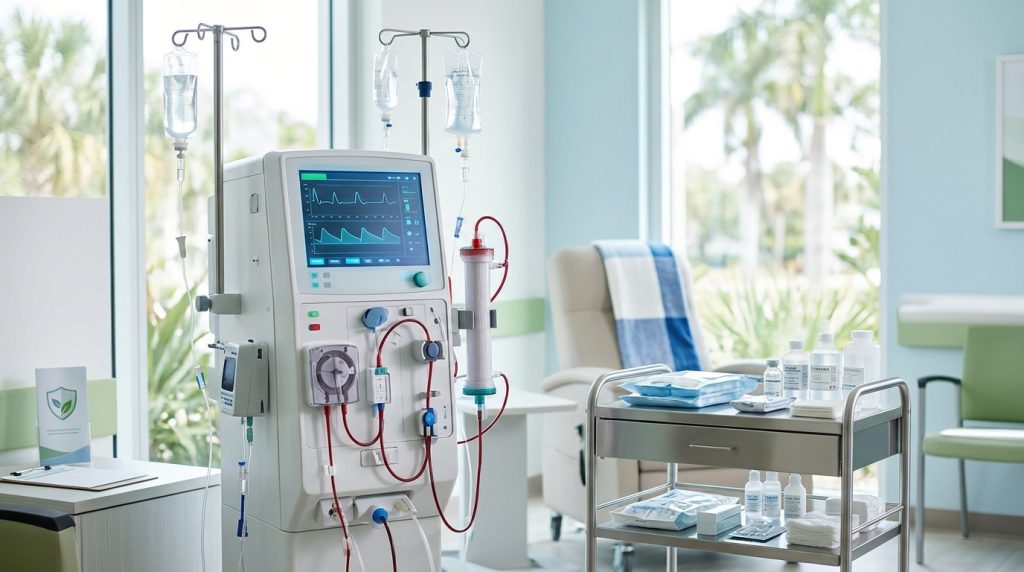
For someone with kidney failure, dialysis is not an occasional medical appointment. It is an ongoing treatment that can involve several visits each week, regular medication, laboratory tests, and close coordination with kidney specialists. Choosing the right health coverage is therefore an important decision.
Medicare Advantage dialysis coverage in Florida can help eligible members pay for covered dialysis treatments and related services. However, the plan you choose can affect your out-of-pocket costs, access to dialysis centers, specialist network, and treatment arrangements.
People with End-Stage Renal Disease (ESRD) can enroll in Medicare Advantage, but they should carefully review the plan's network and coverage rules before making a decision. This guide explains eligibility, dialysis services, home treatment, costs, kidney transplants, and what Florida residents should check when comparing plans.
Does Medicare Advantage Cover Dialysis in Florida?
Yes. Medicare Advantage plans must cover the dialysis services and supplies covered under Original Medicare for eligible members with End-Stage Renal Disease. However, the amount you pay and the providers you can use may differ from Original Medicare. ESRD is a condition in which the kidneys have permanently lost most of their ability to function, requiring regular dialysis or a kidney transplant. Dialysis helps remove waste, excess fluid, and other substances from the blood when the kidneys can no longer perform these functions adequately. Medicare Advantage plans provide Part A and Part B benefits through private insurance companies approved by Medicare. Most plans also include prescription drug coverage through Part D. Although Medicare Advantage plans must cover Medicare-covered dialysis services, they can have their own cost-sharing arrangements, provider networks, and authorization requirements where permitted by Medicare rules. For Florida residents, this means that two plans may cover the same medically necessary dialysis treatment but have different copayments, participating dialysis centers, and kidney specialist networks. Before enrolling, confirm that your current dialysis facility, nephrologist, and other important healthcare providers participate in the plan. You can explore the available Medicare Advantage plans in Florida to understand your coverage options.Can People With End-Stage Renal Disease Enroll in Medicare Advantage?
Yes. People with ESRD can enroll in a Medicare Advantage plan if they have Medicare Part A and Part B and meet the plan's enrollment and service-area requirements. In the past, people with ESRD faced restrictions when trying to join Medicare Advantage. Federal rules changed beginning in 2021, allowing people with ESRD to enroll in Medicare Advantage plans under the same general enrollment framework as other Medicare beneficiaries. This is important for people who develop permanent kidney failure before turning 65. They may qualify for Medicare because of ESRD even if they do not qualify through age or disability.Who qualifies for Medicare because of ESRD?
You may qualify for Medicare based on ESRD at any age if:- Your kidneys no longer work.
- You need regular dialysis or have received a kidney transplant.
- You or an eligible family member meet the required Social Security, Railroad Retirement Board, or government employment conditions.
When does Medicare coverage start for someone receiving dialysis?
Medicare coverage based on ESRD has specific start-date rules. For someone starting a regular course of dialysis, Medicare coverage usually begins on the first day of the fourth month of dialysis treatment. This is known as the four-month waiting period. For example, if you begin regular dialysis on July 1, your Medicare coverage would generally start on October 1. However, coverage can begin earlier in certain situations. If you participate in a Medicare-certified home dialysis training program during the first three months, your doctor expects you to complete the training and perform dialysis at home, and you maintain regular treatment, Medicare coverage may begin in the first month of dialysis. If you are preparing for a kidney transplant, different start-date rules may apply. Because these rules can affect when your treatment is covered, contact Social Security and Medicare to confirm your individual eligibility and effective date.What Dialysis Services and Supplies Are Covered?
Medicare-covered dialysis includes more than the actual treatment session. It can also include medically necessary services, equipment, medications, and supplies required to manage kidney failure. Medicare Advantage plans must cover applicable Medicare Part A and Part B services, although plan-specific costs and network requirements may apply. The following services are generally part of Medicare's dialysis coverage.Outpatient dialysis treatments
Outpatient dialysis is commonly provided at a Medicare-certified dialysis facility. Hemodialysis is a treatment in which a machine filters the blood and removes excess fluid and waste. Many people with ESRD receive hemodialysis three times per week, although the treatment schedule depends on the individual's medical needs and doctor's instructions. Covered services may include the dialysis treatment itself, related nursing care, monitoring, and medically necessary laboratory services.Dialysis medications
People receiving dialysis may need medications to manage anemia, control phosphorus levels, prevent blood clotting during treatment, or address other conditions related to kidney failure. Medicare Part B covers certain medications used as part of the ESRD dialysis treatment benefit. These may include heparin, erythropoiesis-stimulating agents for anemia, and certain phosphate-lowering medications. Other prescription drugs may fall under Medicare Part D, depending on the medication and applicable coverage rules. If you have a Medicare Advantage plan with prescription drug coverage, review its formulary to understand which medicines are covered and whether restrictions apply.Laboratory tests and medical monitoring
Regular testing helps doctors monitor kidney function, electrolyte levels, anemia, and other health concerns associated with ESRD. Medicare-covered dialysis services can include certain laboratory tests and monitoring that are part of the dialysis treatment. Your dialysis care team may also monitor your access site, blood pressure, fluid levels, and response to treatment.Dialysis equipment and supplies
For eligible home dialysis patients, covered equipment and supplies may include dialysis machines, water treatment systems, and other medically necessary items. The dialysis facility is generally responsible for providing covered equipment and supplies directly or through an arrangement with another provider. Coverage depends on medical necessity, the treatment method, and Medicare requirements.Does Medicare Advantage Cover Home Dialysis?
Yes. Medicare Advantage plans must cover Medicare-covered home dialysis services for eligible members. Home dialysis can be an option for people whose medical condition, living arrangements, and treatment preferences make it appropriate. There are two common forms of home dialysis: home hemodialysis and peritoneal dialysis.Home hemodialysis
Home hemodialysis uses a dialysis machine to filter the blood at home. Patients and, when appropriate, their caregivers receive training from a Medicare-certified dialysis training facility. Depending on the treatment plan, home hemodialysis may be performed more frequently or for longer sessions than traditional in-center treatment. Medicare-covered home dialysis services may include:- Home dialysis training for the patient and caregiver.
- Medically necessary dialysis equipment and supplies.
- Certain support services from trained healthcare workers.
- Required monitoring and follow-up with the treating doctor.
- Covered medications and related services.
Peritoneal dialysis
Peritoneal dialysis uses the lining of the abdomen, called the peritoneum, as a natural filter. A cleansing solution is introduced into the abdominal cavity through a catheter and later drained, carrying waste and excess fluid with it. This treatment can often be performed at home. Some people complete exchanges manually during the day, while others use a machine overnight. Medicare may cover medically necessary supplies, equipment, training, and related services when the patient meets the applicable requirements.Does Medicare cover home dialysis training?
Yes. Medicare Part B covers home dialysis training for eligible patients and the person helping them with treatment. The training must be provided by a Medicare-certified home dialysis training facility. Medicare Advantage plans must cover applicable Medicare-covered training services, but the plan's cost-sharing and provider requirements may differ. Not every person with kidney failure is a suitable candidate for home dialysis. Your nephrologist and dialysis care team can help determine whether it is medically appropriate.How Much Does Dialysis Cost Under Medicare Advantage?
The cost of dialysis under Medicare Advantage depends on the specific plan, treatment location, provider network, and applicable cost-sharing rules. There is no single nationwide Medicare Advantage dialysis copayment that applies to every plan in Florida. Under Original Medicare, after meeting the applicable Part B deductible, beneficiaries generally pay 20% of the Medicare-approved amount for covered outpatient dialysis services. Medicare Advantage plans may use different copayments or coinsurance amounts, subject to Medicare requirements. Your total expenses may include:| Cost factor | What to check |
| Dialysis treatment | Copayment or coinsurance for each covered treatment |
| Nephrologist visits | Specialist visit cost-sharing |
| Laboratory services | Whether tests are included in the dialysis benefit or billed separately |
| Prescription drugs | Formulary coverage, tiers, and applicable copayments |
| Home dialysis | Costs for training, equipment, and covered supplies |
| Hospital care | Inpatient cost-sharing if hospitalization is needed |
| Out-of-pocket maximum | The plan's annual limit for covered Part A and Part B services |
Example of how plan costs can differ
Imagine two Medicare Advantage plans both cover outpatient dialysis. Plan A may charge a fixed copayment for each dialysis treatment, while Plan B may use a different cost-sharing arrangement. Even if both plans cover the same treatment, the member's expenses over several months could be different. This is an illustration, not an actual Florida plan quotation. Always use the plan's current Evidence of Coverage and Summary of Benefits to confirm your costs.Check the annual out-of-pocket maximum
Medicare Advantage plans have an annual maximum limit on out-of-pocket costs for covered Part A and Part B services. Once you reach that limit, the plan pays 100% of covered Part A and Part B services for the rest of the plan year. The maximum does not include every healthcare expense. Monthly premiums, prescription drug costs, and certain services that are not covered may be treated separately. For someone receiving dialysis several times each week, understanding the plan's cost-sharing and annual out-of-pocket maximum is particularly important.Can You Choose Your Own Dialysis Center and Kidney Specialist?
You may be able to choose your dialysis center and kidney specialist, but your options depend on the Medicare Advantage plan's provider network and rules. Many Medicare Advantage plans use networks of doctors, hospitals, dialysis facilities, and other healthcare providers. HMO plans generally require members to use in-network providers for routine covered care, while PPO plans may offer some out-of-network coverage at a higher cost. However, plan rules can include important exceptions for dialysis. Medicare's comparison of plan types explains that Medicare Advantage HMO networks generally include an exception for out-of-area dialysis. This can be important when a member needs dialysis while away from the plan's service area. Before enrolling, check the following:- Is your current dialysis center in the plan's network?
- Does your preferred nephrologist participate?
- Is the hospital where you may receive treatment included?
- Are transplant specialists and transplant hospitals in the network?
- Do you need a referral to see a kidney specialist?
- Does the plan require prior authorization for particular services?
Does Medicare Advantage Cover Kidney Transplants?
Yes. Medicare Advantage plans must cover Medicare-covered kidney transplant services for eligible members. However, the transplant hospital, specialists, and other providers may need to participate in the plan's network. A kidney transplant involves several stages of care, including medical evaluations, preparation, surgery, hospital treatment, and follow-up appointments. Medicare-covered transplant services may include:- Medical evaluations before transplant surgery.
- Covered kidney transplant surgery.
- Hospital services related to the transplant.
- Covered doctors' services.
- Certain services provided to the kidney donor during the donor's hospital stay.
- Immunosuppressive medications under applicable Medicare coverage rules.