Medicare Advantage Skilled Nursing Facility Coverage in Florida: Costs, Eligibility and Rehab Rules
Medicare Advantage plans may cover skilled nursing facility care and rehabilitation after a qualifying illness, injury, surgery, or hospital stay. However, coverage depends on your plan’s benefits, medical needs, provider
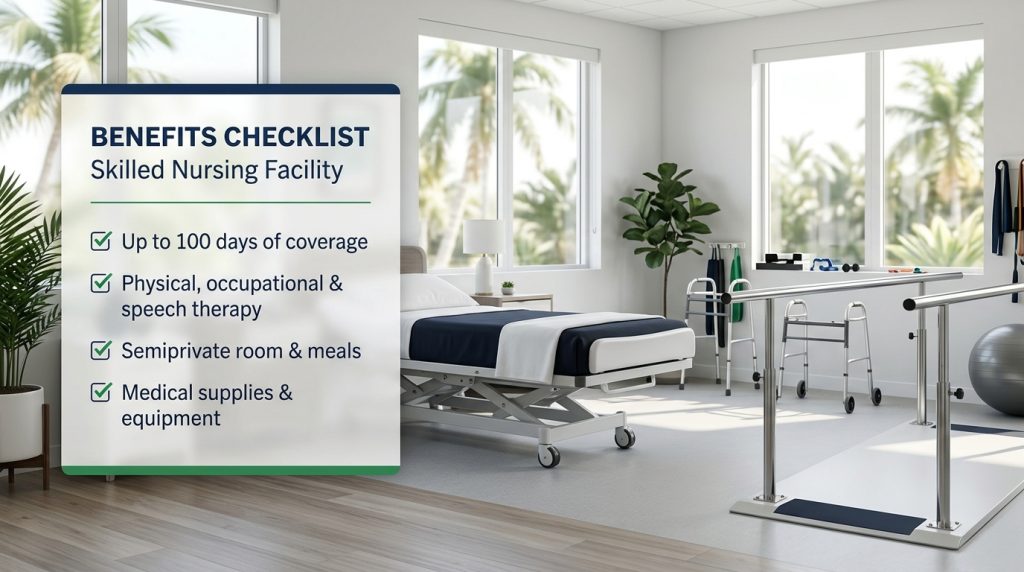
Medicare Advantage plans may cover skilled nursing facility care and rehabilitation after a qualifying illness, injury, surgery, or hospital stay. However, coverage depends on your plan's benefits, medical needs, provider network, and authorization requirements.
For Florida residents, understanding these rules before choosing a Medicare Advantage plan can help prevent unexpected costs and confusion during recovery.
Faircare Insurance helps Florida residents explore Medicare Advantage options and understand important plan benefits. This guide explains how skilled nursing facility coverage works, what eligibility requirements may apply, how costs vary, and what to check before receiving care.
A person may need both types of support at different stages of recovery. However, Medicare coverage for short-term skilled nursing facility care does not mean that long-term nursing home residence will also be covered.
Review the services you need and the terms of your plan before making decisions about ongoing care.
What Is a Skilled Nursing Facility?
A skilled nursing facility (SNF) provides short-term medical care and rehabilitation for people who need professional treatment after a hospital stay or another qualifying medical event. Unlike a long-term nursing home that primarily provides ongoing assistance with daily activities, a skilled nursing facility offers medically necessary services that require qualified healthcare professionals. Services may include:- Skilled nursing care and monitoring.
- Physical therapy to improve strength, balance, and mobility.
- Occupational therapy to help patients manage everyday activities.
- Speech-language therapy when medically necessary.
- Wound care and certain intravenous medications.
- Assistance with recovery following surgery, illness, or injury.
Does Medicare Advantage Cover Rehabilitation After a Hospital Stay?
Yes. Medicare Advantage plans generally cover medically necessary skilled nursing facility care and rehabilitation services covered under Medicare Part A and Part B, subject to the plan's terms and applicable Medicare rules. However, coverage is not automatic simply because a patient has been hospitalized. The patient's medical condition, need for skilled care, plan requirements, and the facility's network status can affect eligibility and payment. Medicare Advantage plans may cover rehabilitation following:- A serious illness requiring continued medical care.
- Surgery that requires supervised recovery.
- A stroke or other condition requiring rehabilitation.
- An injury that limits mobility or daily functioning.
- A hospital stay followed by a medically necessary period of skilled nursing care.
What Eligibility Requirements Apply?
To receive coverage, you generally must meet the applicable Medicare coverage rules and your Medicare Advantage plan's requirements.1. Medically necessary skilled care
A healthcare professional must determine that you need covered skilled nursing services or rehabilitation. Assistance with everyday activities alone, such as bathing or dressing, generally does not establish eligibility for Medicare-covered skilled nursing facility care.2. A qualifying medical condition
Your condition must justify the level of care provided by the facility. Examples may include recovery after surgery, a serious illness, or an injury requiring professional rehabilitation.3. A qualifying hospital stay, when required
Original Medicare generally requires a qualifying inpatient hospital stay before covering skilled nursing facility care. However, Medicare Advantage plans may waive the three-day inpatient hospital stay requirement, depending on the plan. Do not assume that time spent in the hospital automatically qualifies. Your inpatient or observation status can make a difference.4. Plan authorization and network requirements
Your plan may require prior authorization, a referral, or treatment at a participating facility. Confirm these details before admission whenever possible.5. Continued medical necessity
Coverage may depend on whether skilled services remain medically necessary. If a patient no longer meets the applicable coverage criteria, the plan may determine that additional skilled nursing facility days are not covered.Does the Three-Day Hospital Stay Rule Apply to Every Medicare Advantage Plan?
No. The three-day inpatient hospital stay requirement associated with Original Medicare does not necessarily apply to every Medicare Advantage plan. Under Original Medicare, a qualifying inpatient hospital stay of at least three consecutive days is generally required for covered skilled nursing facility care, subject to applicable rules and exceptions. Medicare Advantage plans can have different requirements and may waive this rule. The specific terms of your plan determine whether a qualifying hospital stay is necessary. It is also important to distinguish between inpatient admission and observation services. A patient can spend several nights in a hospital under observation status without those days counting toward Original Medicare's three-day inpatient requirement. Before arranging rehabilitation, ask your plan:- Is a three-day inpatient hospital stay required?
- Does my plan waive this requirement?
- Is prior authorization necessary?
- Which skilled nursing facilities are in my network?
- What medical documentation is required?
What Skilled Nursing Services Are Covered?
Medicare Advantage plans generally must cover Medicare-covered services, including medically necessary skilled nursing facility services, subject to applicable coverage requirements and plan rules. Depending on your medical needs and plan, covered services may include: Skilled nursing care: Professional nursing services for conditions requiring qualified clinical care. Physical therapy: Treatment to improve strength, walking, balance, and movement after an illness, injury, or surgery. Occupational therapy: Rehabilitation to help patients regain the ability to perform daily activities. Speech-language pathology: Medically necessary treatment for speech, communication, or swallowing difficulties. Medical supplies and equipment: Certain supplies and equipment associated with covered skilled nursing facility care. Medication-related services: Covered medications and their administration when included under the applicable benefit and treatment arrangements. Coverage depends on medical necessity and the plan's rules. Not every service provided at a skilled nursing facility is automatically covered.How Much Does Medicare Advantage Skilled Nursing Facility Care Cost in Florida?
The cost depends on your specific Medicare Advantage plan, the services you receive, the length of your stay, and whether the facility is in your plan's network. Some plans may charge a daily copayment for skilled nursing facility care. Others may use different cost-sharing arrangements, subject to the plan's benefits and applicable Medicare requirements. Your total costs may depend on:- The daily copayment or coinsurance listed in your plan.
- The number of covered days.
- Whether the facility is in-network.
- Whether prior authorization requirements have been met.
- Whether your care remains medically necessary and covered.
- Any applicable limits or other plan conditions.
How Medicare Advantage costs differ from Original Medicare
Under Original Medicare, covered skilled nursing facility care generally has no daily coinsurance for days 1–20, a daily coinsurance amount for days 21–100, and no SNF coverage under that benefit after day 100 for the same benefit period. The Part A deductible and other eligibility rules also apply. Medicare Advantage plans may use different cost-sharing arrangements. Therefore, Original Medicare's daily cost figures should not be treated as the amount you will pay under a Medicare Advantage plan. To estimate your expenses accurately, review your plan's Evidence of Coverage or Summary of Benefits. Check the skilled nursing facility benefit, daily copayments, covered days, and network requirements.How to Check Whether a Florida Skilled Nursing Facility Is in Your Plan's Network
Before selecting a skilled nursing facility, verify that the facility participates in your specific Medicare Advantage plan. A facility may accept Medicare but not participate in every Medicare Advantage network. Follow these steps:- Identify your plan. Check the exact plan name and insurance company on your member ID card.
- Search the plan's provider directory. Look for skilled nursing facilities in your area of Florida.
- Call the facility. Ask whether it currently accepts your specific plan, not just Medicare generally.
- Confirm authorization requirements. Ask your insurer and the facility whether prior authorization or a referral is needed.
- Review the costs. Confirm your expected daily copayment, covered days, and any applicable restrictions.
- Keep written confirmation. Save relevant benefit information and authorization details for your records.
What Happens If Your Plan Denies Coverage or Ends Rehabilitation?
A Medicare Advantage plan may deny a requested service or determine that continued skilled nursing facility care is no longer covered. If this happens, you should review the reason for the decision and the appeal instructions. First, ask the plan for a written explanation. Check whether the decision concerns medical necessity, authorization, network participation, or another coverage requirement. You can then:- Review the denial notice and applicable appeal deadline.
- Ask your treating healthcare professional to provide supporting medical documentation.
- Request an appeal using the instructions in the notice.
- Ask the facility and your plan about the process for challenging a decision to end covered care.
- Keep copies of notices, medical records, and communications.
Skilled Nursing Facility Care vs. Long-Term Nursing Home Care
Skilled nursing facility care and long-term nursing home care serve different purposes, and the distinction matters when evaluating Medicare coverage.| Feature | Skilled nursing facility care | Long-term nursing home care |
| Main purpose | Medical treatment and rehabilitation | Ongoing support and daily assistance |
| Typical situation | Recovery after illness, surgery, or injury | Long-term assistance with daily activities |
| Services | Skilled nursing and medically necessary therapy | Personal care, supervision, and custodial support |
| Medicare coverage | May be covered when eligibility and plan requirements are met | Long-term custodial care generally is not covered by Medicare |
| Duration | Based on medical need and applicable coverage rules | May continue for an extended period |