When Does Medicare Starts?

 For most people, Medicare begins the month they turn 65. Your start date can shift based on your situation. If you or your spouse are covered by an employer plan with at least 20 employees, you’re allowed to delay Medicare without facing penalties. Anyone already receiving Social Security benefits is enrolled automatically. If not, you’ll need to sign up on your own during your enrollment window.

Medicare starts with two core parts. Part A covers hospital care, and most people qualify for it without paying a monthly premium. Part B covers doctor visits and outpatient services, and it does come with a monthly cost. Together, these form what’s known as Original Medicare


After your basic coverage is in place, you can expand your protection with private plans. This includes Part D for prescription drugs, Medigap plans for supplemental coverage, and Medicare Advantage (Part C) plans that combine hospital, medical, and often drug coverage under one policy. Even if you choose a Medicare Advantage plan, you still need to keep Parts A and B active and continue paying your Part B premium.

When Medicare Starts for People Under 65 with disabilities?

Medicare isn’t only for people turning 65. Many younger adults qualify earlier because of disability-related benefits. If you receive Social Security Disability Insurance (SSDI), Medicare will begin after you’ve received disability payments for 24 months. This enrollment is automatic, so no application is needed once you reach the 24-month mark.

People living with ALS qualify even sooner. Their Medicare coverage starts the same month their disability payments begin. There’s no waiting period.


When Medicare Start Dates During the General Period

If you miss your initial enrollment window at age 65, you still have options. Premium-free Part A can be added at any time, but Parts B and D must wait for Medicare’s general enrollment period, which runs from January 1 through March 31.

When you enroll during this period, your Medicare begins the month after you sign up. Keep in mind that late enrollment usually leads to permanent penalties for both Part B and Part D, so catching your deadlines can save you money in the long run.

When Medicare Starts During Special Enrollment Period?

Special enrollment periods (SEPs) let you sign up outside the usual windows without paying penalties. Many people qualify for an SEP when they lose group coverage from an employer with 20 or more employees. Retirement, job loss or ending employer-provided coverage can all trigger this window.

If you have an SEP, here’s how enrollment timing works:

  • You get eight months to enroll in Medicare Part B.


  • You get two months to enroll in Part D or a Medicare Advantage plan.


  • If you choose a Medicare Advantage plan, you must also be enrolled in Part B.

Coverage always starts on the first day of the month after your application is processed. Other situations—like receiving incorrect information from a health plan or being impacted by a natural disaster—can also grant an SEP.”

How Your Medicare Start Date is Determined?

Your start date depends entirely on when you sign up:

When you enroll

When coverage starts

Before your 65th birthday month

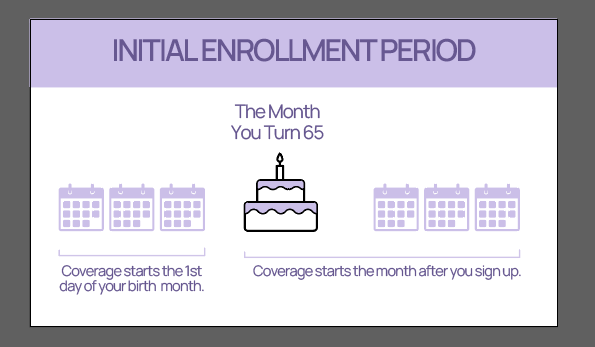
First day of your birthday month

During your birthday month or the three months after

First day of the next month

During general enrollment (Jan 1–Mar 31)

First day of the following month

During a special enrollment period

First day of the next month

If your birthday falls on the first day of the month, Medicare moves your coverage up to the previous month.

Do you get Medicare Automatically at 65?

Automatic enrollment depends on whether you’re already receiving Social Security or Railroad Retirement Board benefits. If you are, Medicare Parts A and B will start as soon as you’re eligible. If you’re not collecting benefits yet, you’ll need to sign up during your initial enrollment period, which lasts seven months—your birthday month, plus the three months before and after.

Medicare advantage plans

Can you get Medicare at 62?

Medicare doesn’t begin at 62 unless you qualify based on disability or specific health conditions like ALS or end-stage renal disease. People with SSDI are typically enrolled after 24 months of disability benefits, and people with ALS receive Medicare the same month their benefits begin. Those with ESRD can qualify once dialysis starts or when preparing for a transplant.

Everyone else enters Medicare during their initial enrollment period around age 65.

Is the Medicare Eligibility Age Increasing?

There have been discussions about raising the eligibility age to 67, but nothing has changed. Medicare still begins at 65 unless you qualify earlier due to disability, ALS or kidney failure.

FAQs about Medicare Enrollment

  1. At what age does Medicare coverage typically begin?
    Most people become eligible for Medicare at age 65. Your exact start date depends on when you enroll and whether you’re already receiving Social Security benefits.
  1. Can Medicare start before age 65?
    Yes. If you receive Social Security Disability Insurance (SSDI), coverage usually begins after 24 months of disability benefits. People with ALS receive Medicare the same month their disability benefits start. Those with end-stage renal disease may qualify earlier depending on dialysis or transplant timing.
  1. If I’m still working at 65, can I delay Medicare?

Yes. If you or your spouse have employer health coverage through a company with 20 or more employees, you can postpone Medicare without facing penalties. Coverage will start later during a Special Enrollment Period when your employer coverage ends.

  1. What is the Initial Enrollment Period (IEP)?

The IEP is a 7-month window surrounding your 65th birthday. It includes the three months before your birthday month, your birthday month, and the three months after. Signing up during this window ensures your coverage starts on time and helps avoid late penalties.

  1. What happens if I miss my Initial Enrollment Period?
    If you miss it, you can enroll during the General Enrollment Period from January 1 to March 31. Coverage starts the first day of the following month, but you may face permanent penalties for late enrollment in Part B or Part D.

Naomi Catterton

Insurance Broker

With over 25 years of experience in the insurance and financial industries, I’ve guided families and businesses through the complexities of life and health coverage.

Table of Contents